
If you have searched for what is 30.6df496–j261x5, you have likely encountered this unusual identifier in a software application, technical document, server log, or database record. While the code may appear mysterious at first glance, there is currently no evidence linking it to an official Romanian government standard, banking classification, healthcare code, or public registry.
In contrast, the format points towards it being a computer-generated identifier within an application. Contemporary applications often produce random codes to keep an eye on deployments, events, troubleshoot issues, or categorize information on the backend. Such identifiers are also rampant within the banking, healthcare, enterprise IT, and government tech industries all around the world, and of course, Romania is no exception.
If you are exploring other interpretations of this unusual identifier, read our guide to 30.6df496–j261x5 in milk for more context about the term and its possible meaning.
Quick Facts About 30.6df496–j261x5
| Category | Details |
| Identifier Type | Technical reference code |
| Public Romanian Registry | Not found |
| Government Classification | No evidence |
| Product Model Number | No evidence |
| Security Risk | Not inherently dangerous |
| Likely Usage | Tracking and diagnostics |
| User Action Required | Usually none |
Why Do Software Systems Create Code Like This?
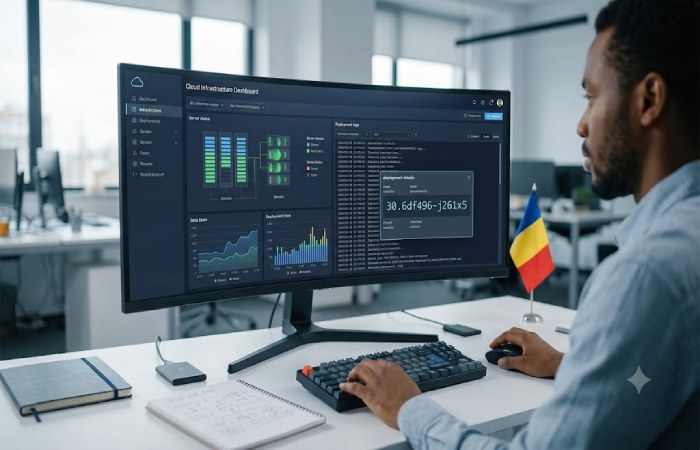
Such software solutions deal with huge amounts of data daily, from banking transactions to user healthcare information or e-commerce orders. Whether we are talking about thousands or millions of transactions, systems automatically generate identifiers to organize everything.
These identifiers help developers and administrators:
- Track specific events
- Identify software versions
- Monitor server activity
- Locate error reports
- Manage database records
- Improve troubleshooting speed
- “Without those markers, it would be infinitely harder to track down and solve the technical problems, especially at the large companies that do business from several sites around the country.”
Understanding the Structure
There’s no official documentation stating what this precisely represents, but it resembles the sort of thing an identifier would be that’s produced by today’s software engineering tool chain.
| Segment | Possible Purpose |
| 30 | Version or release number |
| 6df496 | Hash value or unique reference |
| j261x5 | Build identifier or deployment code |
Developers frequently combine numbers and alphanumeric strings to ensure every identifier remains unique within a system.
How Similar Identifiers Are Used in Romania
The Romanian society has seen a tremendous digital transformation in the last decade. We can find automated systems for several industries; these systems create reference codes for use inside the companies.
For instance, banks may utilize transaction IDs for tracking card transactions and bank transfers. Medical centers generate record IDs to identify and manage hospital files, records, and lab requests. Public government portals generate tracking numbers to process tax filings and applications.
These records are mostly used by system administrators and system engineers for recording various activities and for ensuring the effective function of services. Ordinary users hardly ever communicate with them.
Common Places Where You Might Encounter 30.6df496–j261x5
Many users discover identifiers unexpectedly while performing routine activities online.
You may encounter it in:
- Application error messages
- Software update notifications
- System logs
- Database exports
- API responses
- Technical support reports
- Cloud infrastructure dashboards
- Developer tools
The appearance of the identifier alone does not necessarily indicate a problem.
Could It Be a Software Version?
One reasonable explanation is that what is 30.6df496–j261x5 represents a version-related reference. Software teams often assign unique identifiers to builds, releases, and deployments.
For a new version of an app that’s released, a new reference could be automatically created by the platform that helps an engineer understand which release the app is currently running. This would help to solve problems more quickly because developers will be able to track down the release to the specific issue.
For this reason, many technical experts would view the identifier as resembling a build or deployment reference rather than a public-facing code.
Is 30.6df496–j261x5 Dangerous?
| Scenario | Risk Level |
| Appears in system logs | Low |
| Appears during updates | Low |
| Found in technical documentation | Low |
| Appears with malware alerts | Investigate |
| Appears during unauthorized access attempts | Investigate |
| Appears after suspicious downloads | Investigate |
The identifier itself is benign. The thing to consider is where it shows up. If it appears in conjunction with peculiar activities, security warnings, or an access breach, then further inspection might be required.
Benefits of Technical Identifiers
Organizations use identifiers because they provide several operational advantages.
Major benefits include:
- Better system organization
- Faster troubleshooting
- Improved security monitoring
- Reduced duplication of records
- Easier database management
- More efficient software deployments
- Accurate audit trails
These benefits explain why similar identifiers are common across Romanian enterprises and public-sector institutions.
Common Misconceptions
Many users make assumptions when they see unfamiliar identifiers. However, several common beliefs are inaccurate.
Myth 1: It Is a Government Code
There is no public evidence that what is 30.6df496–j261x5 is associated with any Romanian government classification system.
Myth 2: It is malware
The identifier itself is simply a string of characters. It does not perform any action on its own.
Myth 3: It Contains Personal Information
Most software-generated identifiers are designed for system tracking rather than storing personal data.
Myth 4: It Can Easily Be Decoded
Many identifiers are generated using internal algorithms and can only be interpreted by the software that created them.
What Should You Do If You See This Identifier?
If you encounter what is 30.6df496–j261x5, consider the surrounding circumstances before taking action.
Recommended steps:
- Note where the identifier appeared.
- Check whether an error message accompanied it.
- Take a screenshot if troubleshooting is required.
- Record the date and time.
- Contact technical support if problems persist.
- Provide the identifier to support personnel.
In many situations, no action is necessary because the identifier serves only as an internal reference.
Conclusion
Based on currently available information, what 30.6df496–j261x5 appears to be is an internal software identifier rather than an official Romanian code, product model, or government reference. The format closely resembles the tracking and diagnostic identifiers generated by modern applications, databases, and cloud platforms.
The future of digital transformation in Romania sees more identifiers of this type used in areas like banking, health, government, or business applications. Generally speaking, for most users, identifying the code on your screen is no reason to panic. If you know what kind of application uses such identifiers, you know how to recognize those messages that have no particular implications.